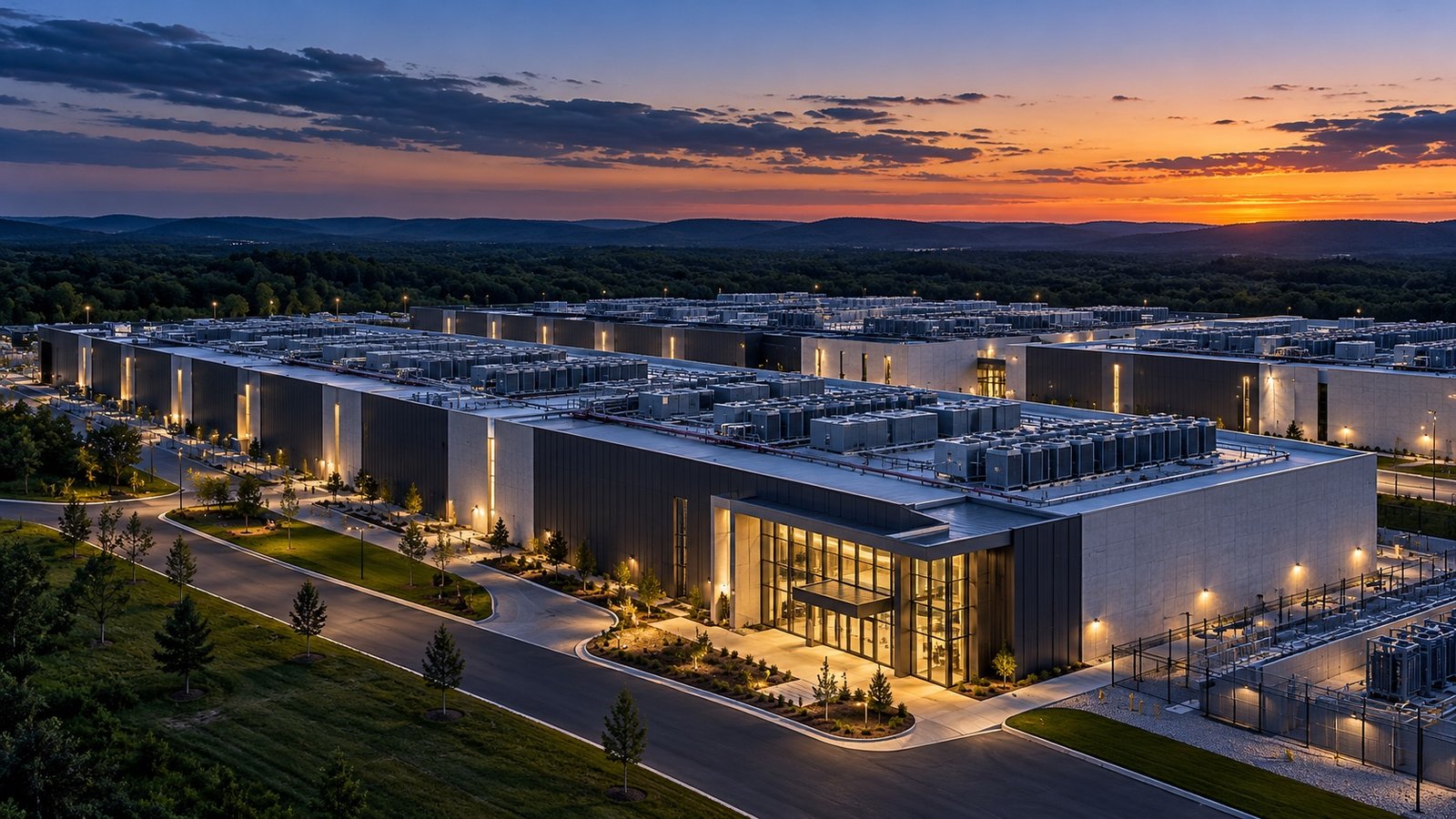
Data center sourcing and advisory
Data center sourcing
and transaction
advisory.
We find capacity, sell or reposition facilities and screen acquisitions for enterprises, operators and investors. You get a written recommendation with the power evidence behind it.
US capacity sourcing, facility options and acquisition screening, with evidence behind each recommendation.
Start with your objective
Three decisions.
One focused partner.
Find capacity
You need megawatts on a date. We screen sites against your power requirement and your delivery date.
You get: a Site Screen. Three to five sites with the utility position quoted from the document, the energization date and the evidence behind it. How it works 02 For owners of facilitiesSell or reposition
You own an enterprise data center or colocation facility. We compare selling, retaining and repositioning it.
You get: an Asset Position Review. A documented power position, three valuation ranges under three buyer types, a named buyer list, and a go, fix-first or hold recommendation. How it works 03 For investors and capital partnersEvaluate an acquisition
You are screening a facility, powered shell or powered land. We test the power position and the credit behind the leases.
You get: a Power and Credit Screen. Interconnect and tariff position, energization risk, guarantor separated from lease signatory, and the three items most likely to move price. How it worksWhat a site screen looks like
Power promised. Power documented.
A useful power-delivery date connects capacity, utility conditions, equipment, facility readiness and the work still required. A site screen records the source, scope and unresolved dependencies behind each proposed milestone, so the shortlist shows what is documented and what still needs an answer.
| Delivery evidence | Site A | Site B |
|---|---|---|
| Utility position | Load letter issued | Study phase |
| Energization | Q3 2027, documented in the ESA | 2029, verbal indication |
| Equipment | Transformer on order | Not ordered |
ESA: electric service agreement. Illustrative; a full screen runs three to five sites against twenty-plus criteria.
How an engagement runs
Clarity before commitment.
- 01
Define your requirements
Start with the decision in front of you and the date it has to be made.
- 02
Verify the evidence
Test technical and commercial assumptions against the documents.
- 03
Decide on a written recommendation
Know what to do next and why. If the answer is that you shouldn’t do the deal, that’s in the document too.
About Stacked AI
Evidence behind the recommendation.
Stacked AI provides US data center sourcing and transaction advisory for capacity buyers, facility owners and investors. We assess sites, power commitments and transaction evidence to support a clear next decision.
- Off-market access. Direct relationships with enterprise owners, not listing services.
- A written recommendation. Supporting documents, assumptions and unresolved questions presented together.
- We read the asset, not just the paper. Power, cooling, fiber and conversion economics.
Our network includes Fortune 500 enterprises, infrastructure funds, neocloud operators, regional utilities, PE firms and REITs.
Source: CBRE, North America Data Center Trends H1 2026 (August 27, 2026). Figures cover CBRE’s eight primary US markets; construction capacity is rounded.
Coverage
United States. Wherever the requirement is.
We work across the US, not a fixed list of metros. Primary markets when the requirement needs scale and carrier density, secondary metros when power and price decide it, and sites that were never listed anywhere, which is most of what we see.
Insights
Evidence for your next decision.
Colocation, Retrofit, or Development: How to Choose
Compare colocation, retrofit and new development against one workload, delivery milestone and commercial scope. Use evidence, responsibilities and fallback options to narrow the shortlist.
What Evidence Supports a Power Delivery Date?
A practical checklist for assessing a data center power-delivery date: capacity definitions, utility conditions, equipment, facility readiness and unresolved dependencies.
Common questions
Frequently asked
How is StackedAI different from a traditional CRE broker?
We work only on data center infrastructure. These deals turn on power, on what the utility has actually committed to in writing, and on the credit behind the lease. That’s what we answer. A generalist broker is selling the real estate wrapper.
Do you work with both buyers and sellers?
Yes. We advise asset owners on divestitures, help companies source capacity, and connect investors with qualified acquisition opportunities.
What markets do you cover?
The United States, wherever the requirement is. Primary markets, secondary metros, and sites that were never listed. We follow the deal, not a coverage map.
What kinds of assets do you work on?
Enterprise-owned facilities, commercial colocation, powered shell, powered land, and retrofit or conversion candidates. Energized, partially active, or still in the interconnection queue.
What does it cost to work with StackedAI?
It depends on scope, and scope comes out of the first conversation. Contact Stacked AI, tell us what you’re deciding, and we’ll tell you what the work involves and what it costs.
Get started
Tell us what you’re working on
Asset owner, capacity seeker, or investor: start a conversation and we’ll respond within 48 hours.
Your inquiry is handled by Stacked AI. Privacy Policy · Prefer email? info@stackedai.net