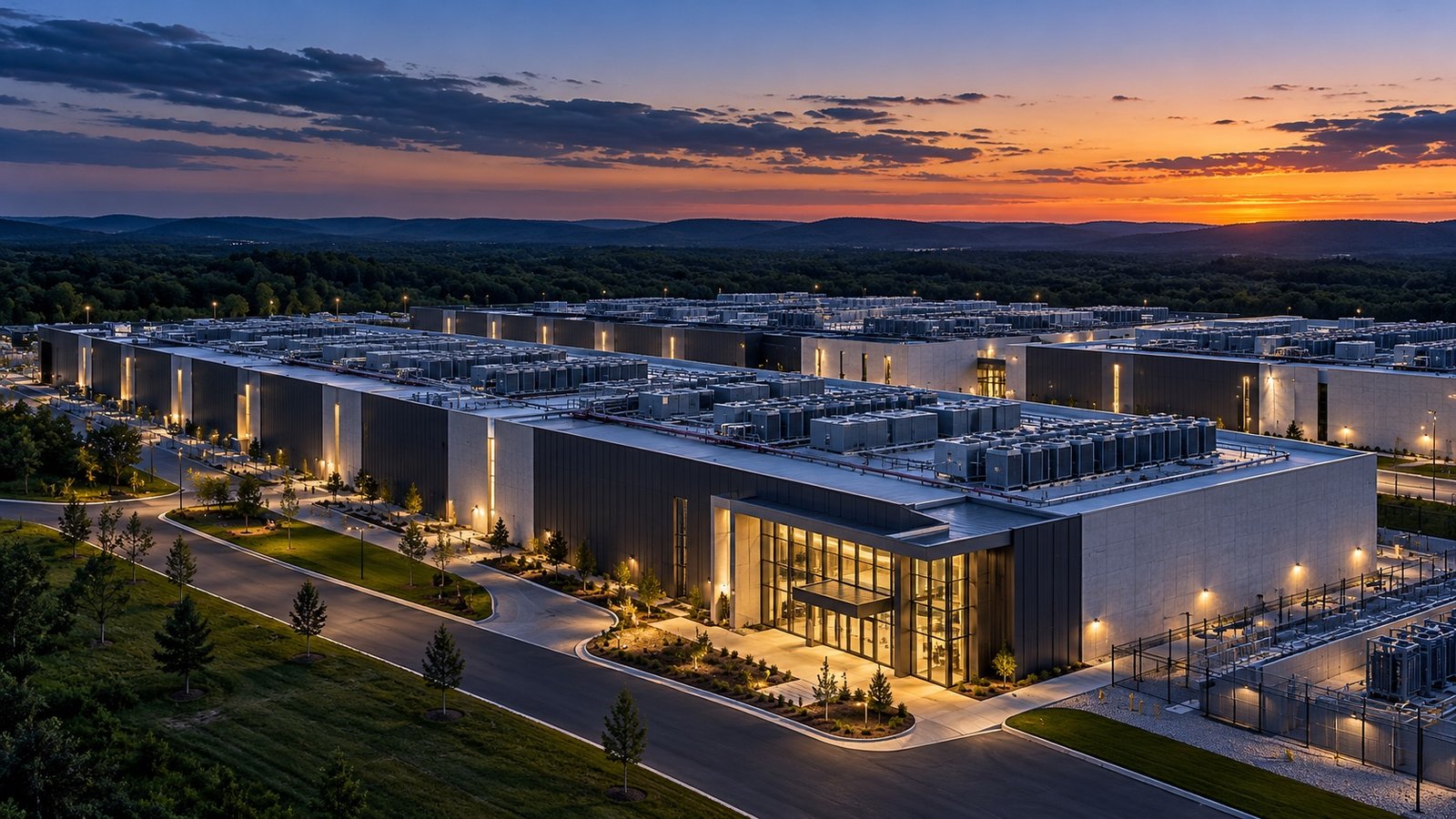
You own a building that no longer fits the business. With primary-market vacancy at 1.4% and more than 80% of under-construction capacity already preleased, the buyer set for an energized site is deeper than it has been in years. A colocation operator, a hyperscaler, a sale-leaseback buyer and an industrial-conversion buyer will each price your asset differently, and the first job is finding out which of the four it really belongs to.
Riot Platforms is the public version of this. Same land, same substation, same interconnect the company held as a miner, repriced on a twenty-year lease once a credit tenant wanted the megawatts.
Who this is for
CFOs and CIOs holding an owned room after a cloud migration. Corporates rationalizing a campus. PE portfolio companies carrying a data center on the balance sheet at book, and industrial owners sitting on an interconnect the original load no longer needs.
What usually goes wrong
It gets listed as commercial real estate. A generalist broker prices the shell and the roof. In this asset class most of the value sits in the interconnect and the permits, and a shell-based price leaves that on the table.
The power position was never written down. The most valuable thing many of these assets own is a utility position that exists in nobody’s file. Buyers pay for documented evidence and discount assertions, and on a power position that discount runs deep enough to change which buyer type wins the asset.
Only one buyer type gets shopped. Run a single process to a single audience and you never find out what the other three would have paid. The spread between the high and low buyer type on these assets is routinely wider than the negotiating range inside any one of them.
How we work
Document the power position. What the interconnect actually is, and how much of it transfers to a buyer under the tariff as written.
Price it under each buyer type. Colocation, hyperscale, sale-leaseback and industrial conversion each run on different assumptions, and you see all of them rather than a single blended number.
Fix what will cost you in diligence. There are usually two or three items, and every one of them is cheaper to handle before a buyer’s diligence team finds it.
Run the process. Through LOI and diligence to close, with the same person on it the whole way.
Start here: the Asset Position Review
What comes back is written, and it covers:
- a written statement of the power position, sourced to the underlying documents
- three valuation ranges under three buyer types, with every assumption shown
- a named list of buyers who are realistically in the market for this asset
- the two or three items most likely to cost you money in diligence
- a recommendation: go, fix first, or hold, with the reasoning attached
Questions
The building is old. Is it worth anything? Often, yes. Age tells you about the mechanical plant. It tells you very little about the interconnect, the permits or the site, and that’s where the money usually is.
We’re not sure we want to sell. Then this is a valuation rather than a listing. A good share of these end in a decision to hold, which is a much better position to hold from once you have a number.
Does this commit us to a broker agreement? No. The review is priced and delivered on its own, and plenty of them end there.
Start with an Asset Position Review
Tell us what you own and roughly where it sits. The first call is a conversation, not a pitch.
Related reading: the power-delivery evidence checklist and our evidence and editorial methodology.
Working resource: use the blank owner-options worksheet to compare selling, retaining and repositioning against the same assumptions and evidence.